
Curanderismo is a wide gamut of healing traditions that has been practiced in the American continent for centuries. Historically, these traditions emerged from the synthesis of Spanish, American Indigenous and African cultures that started around the 16th century. Curanderismo continues to evolve and traditions from other sources like Oriental medicine have been integrated into it.
One of the central concepts of Curanderismo is the belief that the body, mind, soul, and spirit are interconnected. All of these layers of a person are considered in the healing rituals and traditions. According to practitioners, for example, if the soul is negatively affected, then the body will reflect it and vice versa. This makes Curanderismo a holistic approach to healing.
In the above image we see a practitioner of Curanderismo using a fire cupping therapy called ventosas con fuego. Her name is Rita Navarrete Perez and she is from Jilotepec, Mexico the ancestral lands of the Otomi indigenous people.
In Curanderismo, a practitioner of fire cupping therapy falls under the category of sobador. A sobador is someone who uses energetic and massage techniques to induce healing in a way comparable to acupressure.
As a sobadora, Rita works at the body level to help people relieve tension, pain and stress. She also works on the mental level as a consejera, someone who provides counseling to overcome mind obstacles and change destructive habits. Rita has worked with many victims of domestic violence.
The wide gamut of healing traditions that constitute Curanderismo include: massage, herbalism, temazcal therapy, midwifery, bone setting, fire cupping, acupuncture, spiritual cleansing, prayer, counseling, soul retrieval, and exorcism. This is not an exhaustive list, rather it is meant to illustrate the wide spectrum of topics under Curanderismo.
In this list, we can see therapies that address the mind, body, soul and spirit. While massage may provide relief for a person dealing with back pain, a spiritual cleansing may provide relief for problems dealing with trauma. Practitioners believe that dealing with both problems is equally important.
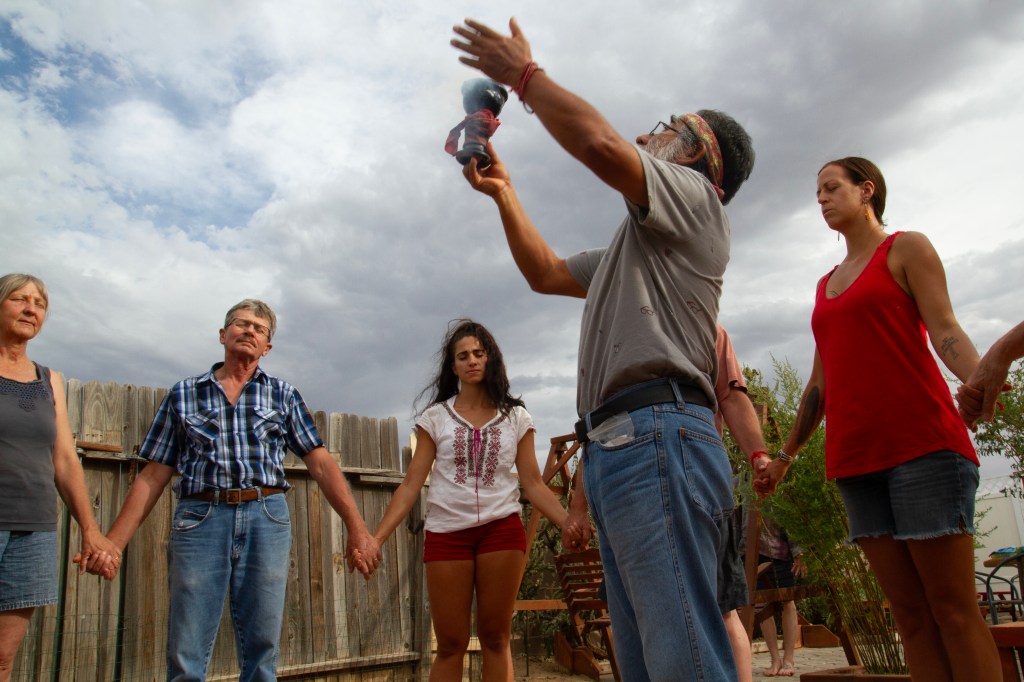
In the above image, a practitioner of Curanderismo named Laurencio Lopez Nunez is leading a group ceremony in preparation for a temazcal therapy session, a practice derived from the Indigenous ancestry of Mexico. In ceremonies like these, practitioners work with the spiritual layer.
Simply put, a temazcal session is a community healing event that uses intense heat, ceremony, prayer, singing, and meditation. It takes place inside a small enclosure known as the house of sweat or temazcalli. See the image below.

It is worth noting that not everyone uses the term Curanderismo to describe these traditions. Other commonly used labels include traditional, ancestral, native, plant, holistic, and grandparent medicine.
Johns Hopkins Medicine refers to some of these healing practices as complimentary and alternative medicine. Also listed on their website is homeopathy, Chinese medicine, Oriental medicine, chiropractic medicine, body movement therapies, nutrition, meditation, and Reiki. Some practitioners of Curanderismo become certified in the above practices.
In the above image, we see a photograph of the late Maestra Laura as she was known in her community of Los Lunas, New Mexico. She is holding an incense burner that according to her symbolizes the fire of the heart and creation.
Maestra Laura came from a mixed background. She is originally from San Benito, Texas but was raised in Tampico, Mexico the land of grandmother. She learned rituals and ceremonies of Curanderismo from her.
Maestra Laura joined the U.S. army and had a chance to travel to various places including Germany, South Korea and Thailand where she saw a variety of spiritual practices. According to her, Curanderismo and all of the other practices that she saw overseas are all related, people just call them different things.
Another important concept when defining Curanderismo is its history as a folk tradition. Many of the practices are passed down orally and in closely knit groups of people like families in rural communities. This gives the healing traditions and rituals a cultural mark, in other words they are linked to the identity of the people that practice them. Such identity can include religion, customs, cuisine, language, and natural habitat.
The work of Laurenco as a temazcalero or sweat lodge guide, for example is represetative of the traditions of his homeland Oaxaca. Mezcal, is a beverage with deep cultural ties and significance to Oaxaca. In June of 2023, I watched him throw a small amount of mezcal towards the heavens as an offering to what he calls the great spirit. He told me that he made a prayer to the great spirit asking for strenght to lead a sweat lodge theraphy.
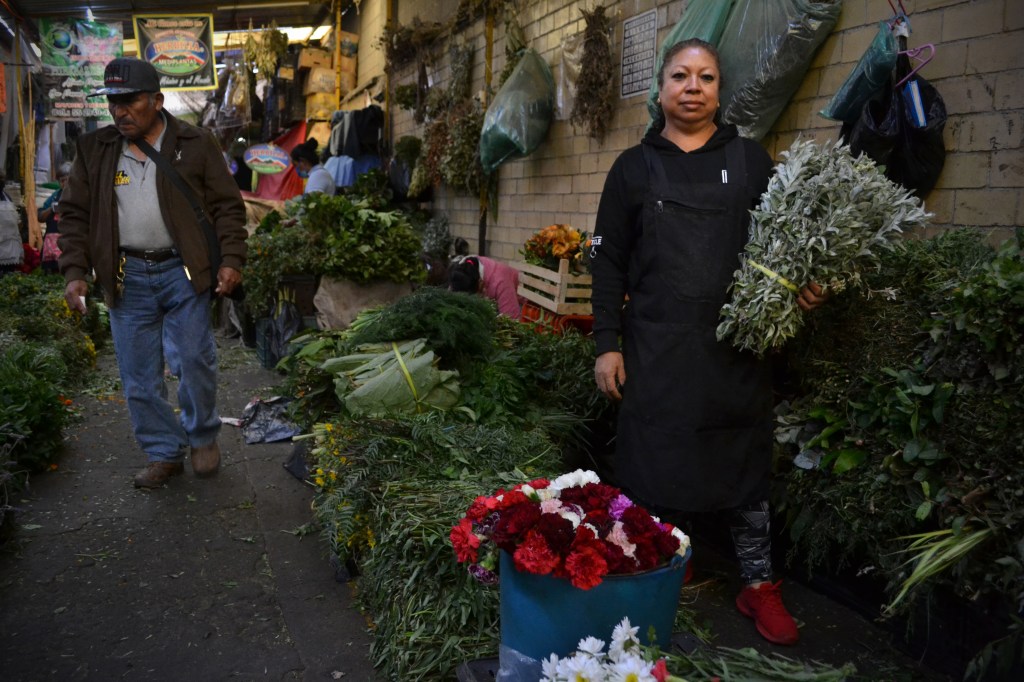
In the above image, we see a yerbera or herbalist named Marina Morales Perez. She sells medicinal plants at the Sonora market in Mexico City and started working with medicinal plants since she was eighteen. She learned mostly from her mother. Marina has been selling plants at this market for over thirty-five years. Among the plants and flowers that she sells are: sage, horsetail, nettle and neem.
In the United States, it is uncommon to find open air markets that sell fresh medicinal plants in this fashion. The closest comparison could be a farmers market but you will likely find smaller presentations of herbs meant for cooking rather than for spiritual cleanses and baths. If you visit a supermarket, will also find herbs but in small quantities enclosed in plastic packages. It is part of the folk traditions of Mexico to find markets like the Sonora market that carry a selection of fresh, unbranded, unpackaged herbs and plants for use in Curanderismo.
Because Curanderismo addresses the spiritual and soul levels of a person, it may seem like a religion sometimes, specially if we consider the heavy influence of Catholicism in Mexico.
Is Curanderismo a type of religion? Not in the traditional sense, there is no sacred text or book that unifies the practices. Nor is there a structure of authority governing the practices or agreed upon holy sites. Curanderismo is instead a healing practice with a spiritual component that mostly blends Catholicism with Indigenous spirituality. Affiliation is not required to experience its healing practices.
People from various religious backgrounds or no background can be drawn to Curanderismo because it offers something of spiritual value to everyone. Practitioners can tailor their work to adapt to a person spiritual or religious needs.
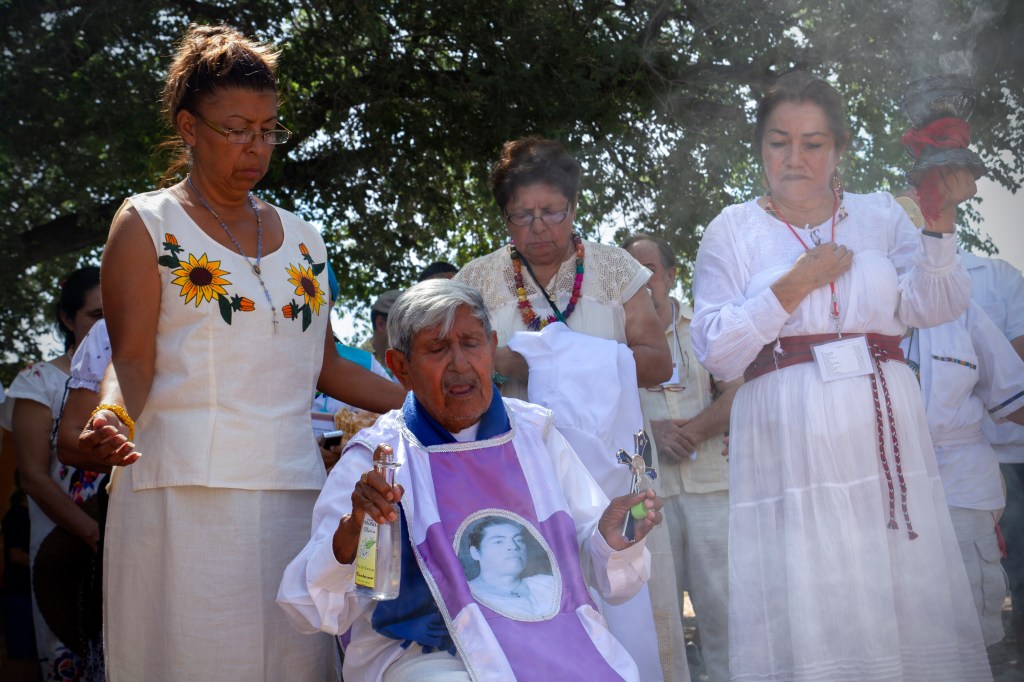
In this image we see the late Crecensio Alvarado Núñez a healer from the Texas-Mexico border region. He was known to many people as Chenchito. He used holy water and a Catholic cross for a ceremony that blessed participants and wished them good health. Chenchito wore a vestment with an image of El Niño Fidencio, a legendary folk healer from northeast Mexico.
El Niño Fidencio was active as a healer in rural town called Espinazo, located near the line that divides the states of Coahuila and Nuevo León. The town is located about 90 miles northwest of Monterrey. There is a devout group of followers known as Fidencistas who honor the legacy of El Niño Fidencio. Chenchito belongs to this tradition. Below, he’s is depicted wearing a vestment and using prayer to invoke the spirit of El Niño Fidencio. This is an example of the spiritual level in Curanderismo.

 Curandero Project
Leave a comment