In the section What is Curanderismo, we looked at how Mexican folk healing is connected with the identity of the people who practice it.
Rio Grande City, Texas
This hierberia called La Esperanza located along the border, for example, has evidence of bicultural and bilingual identity. Signs in English and Spanish are displayed at the entrance. Below is a slideshow of images featuring Hierberia La Esperanza located in Rio Grande City, Texas.
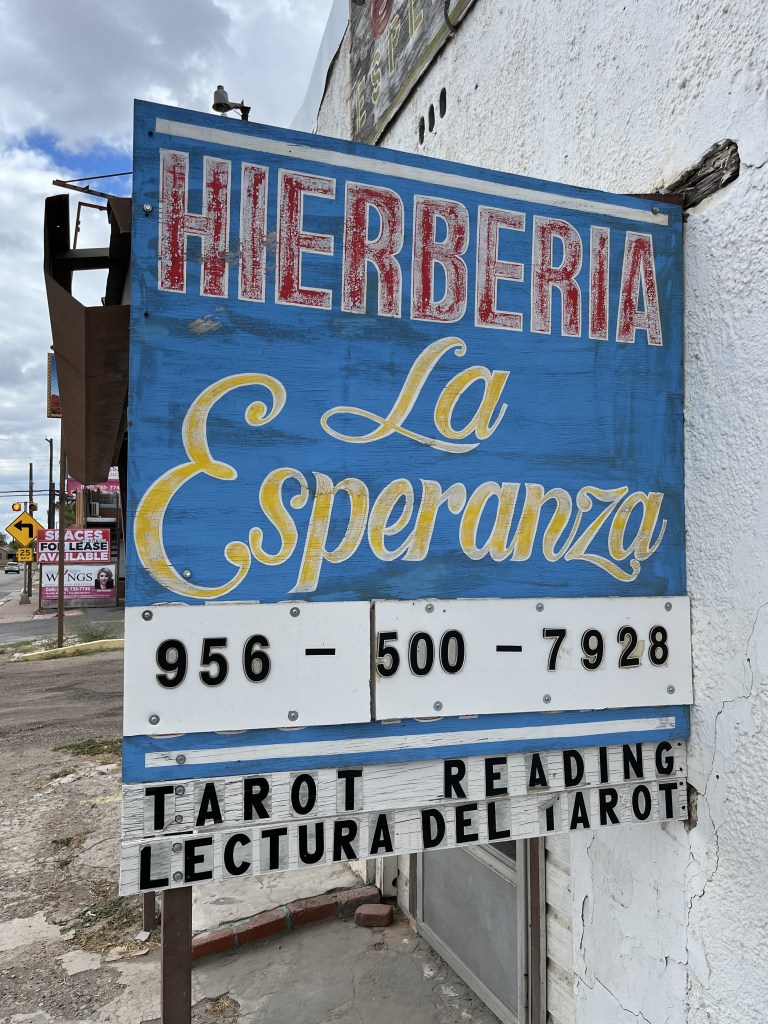
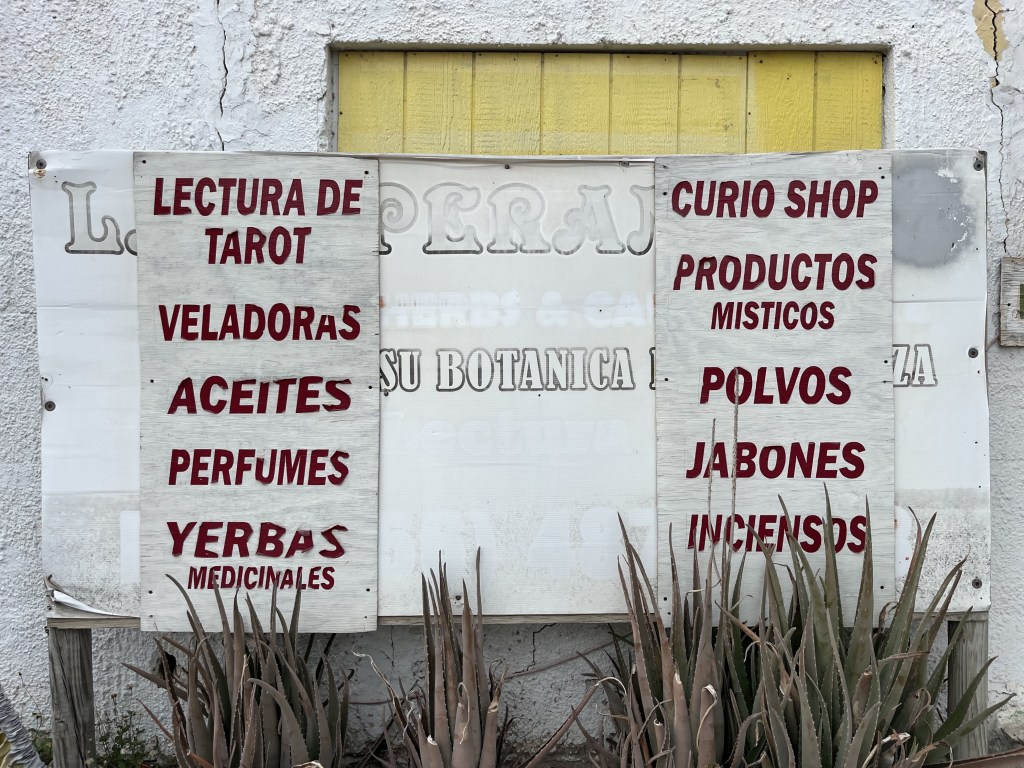
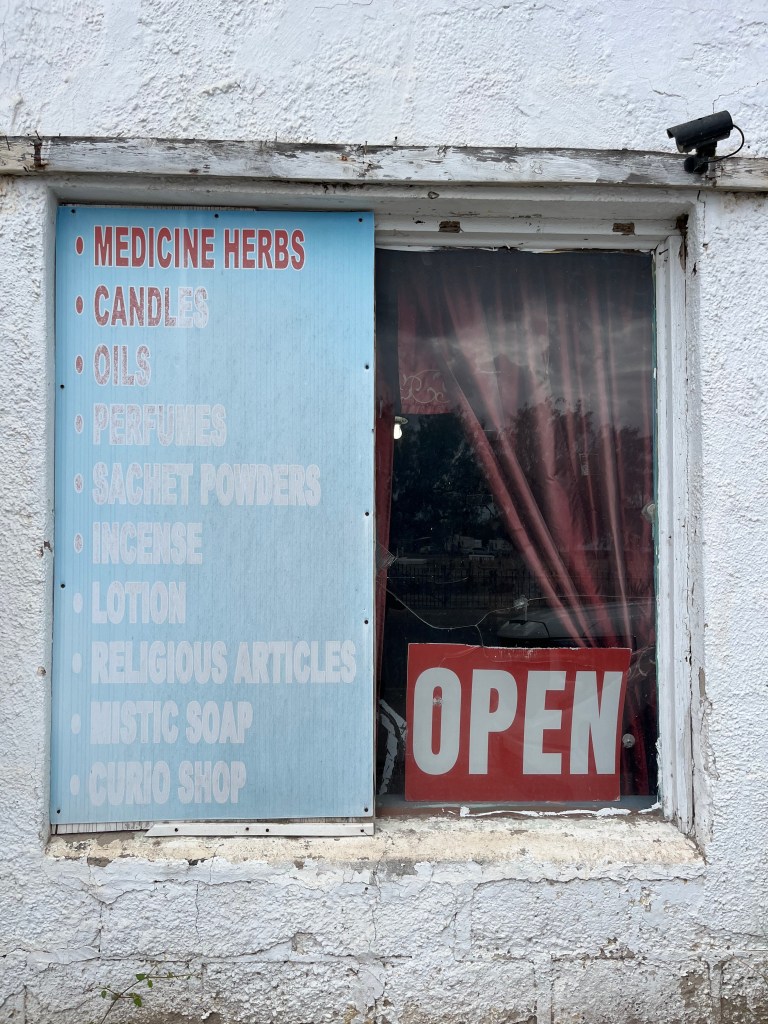
Upon entering the building, I experienced a feeling of nostalgia not only because of the age of the building and the neighborhood but also for the objects on display. This hierberia is located on a historic section of Rio Grande City surrounded by old homes and buildings. Inside, the items on display seemed distant from the present.
In an era of smart phones, electric vehicles and robotic surgery, hierberia can stand out for their handmade quality of the products offered. For example, there were some amulets made in small batches named costalito Pancho Villa used for invoking luck, love, protection, fortune, money, health and peace. Each amulet is unique in its design, placed in a small plastic bag and stapled to thick sheet of paper sturdy enough to serve as display and hold about 12 amulets. Each amulet comes with small instructional card describing its intended use. The appearance of this faith products is reminiscent of folk art or homemade goods.
Pancho Villa is a controversial figure in history. Sometimes recognized as a folk hero other times vilified as a bandit. He is undeniably a famous figure in the history of the United States and Mexico border specially after a famous raid on Columbus, New Mexico. The presence of Pancho Villa as a symbol of power in Curanderismo indicates a connection with Mexican identity and history.
Hierberia La Esperanza has an impressive assortment products related to Curanderismo. The owner Jose also does limpias too but not for every person. He is selective depending on the type of person that comes in. Some people come back frustrated stating that the limpia did not work. In his defense, Jose suggested that people should come in with an open mind and faith in the ritual.
Matamoros, Tamaulipas
On September 30, 2025 I visited Matamoros, Mexico and found a few hierberias in the old city center. I met a curandero named Luis at Hierberia San Benito Abad. He asked me to only use his first name. There were two neon green paper signs affixed to the bars on the windows advertising: se hacen limpias meaning spiritual cleanses are done here. Luis explained his approach to limpias, which involve the movement of energy. He said that after receiving a limpia the person feels a sense of peace, relaxation and sometimes exahustion after negative nergy is removed. He had two 5-gallon buckets on the floor filled with plants and some water to keep them fresh. Fresh plants are usually stored in that fashion for limpias.

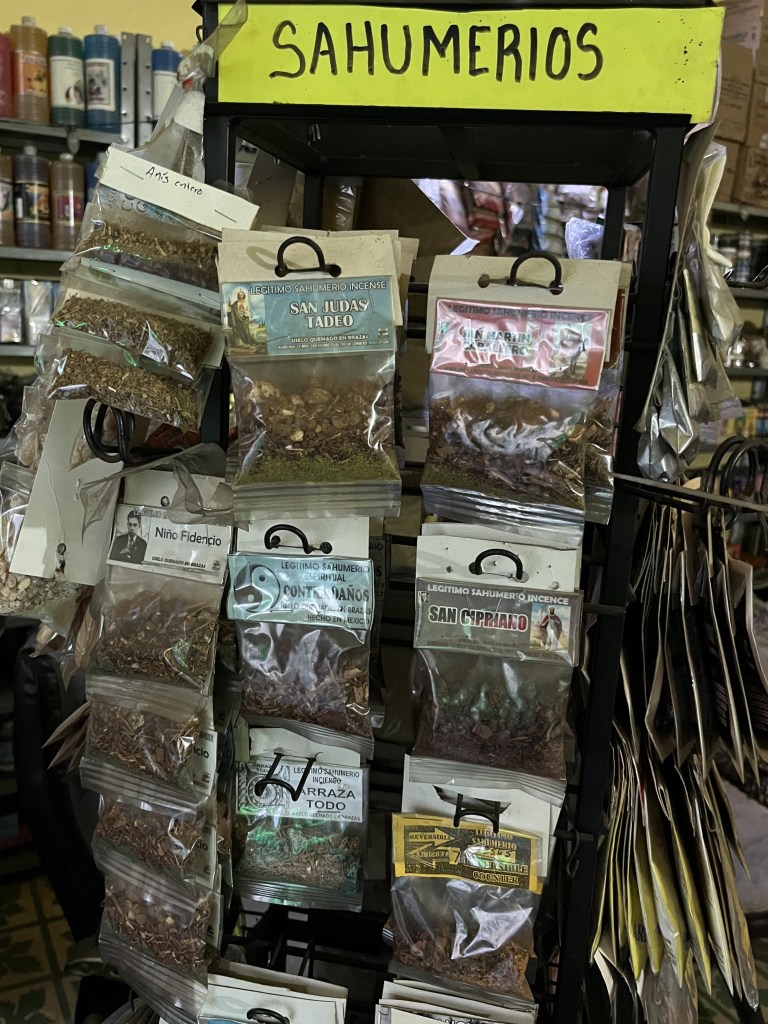

There is rectangular display featuring sahumerios or aromatic blends of incense. The blends can include dried leaves, aromatic plants, herbs, barks, and resins. They are classified according to purpose. Some are meant to invoke saints, folk heroes or effect certain outcomes depending on the intention.
In the slideshow we can see sahumerios dedicated to Niño Fidencio, San Judas Tadeo, and San Cipriano and San Martin Caballero. There is one called Arraza Todo and is meant to sweep away everything bad. To use them, the curandero applies a pinch of the blend on burning charcoal or brazas in Spanish. This will create a smoke that oftentimes has a pleasant aromatic effect, specially if using copal.
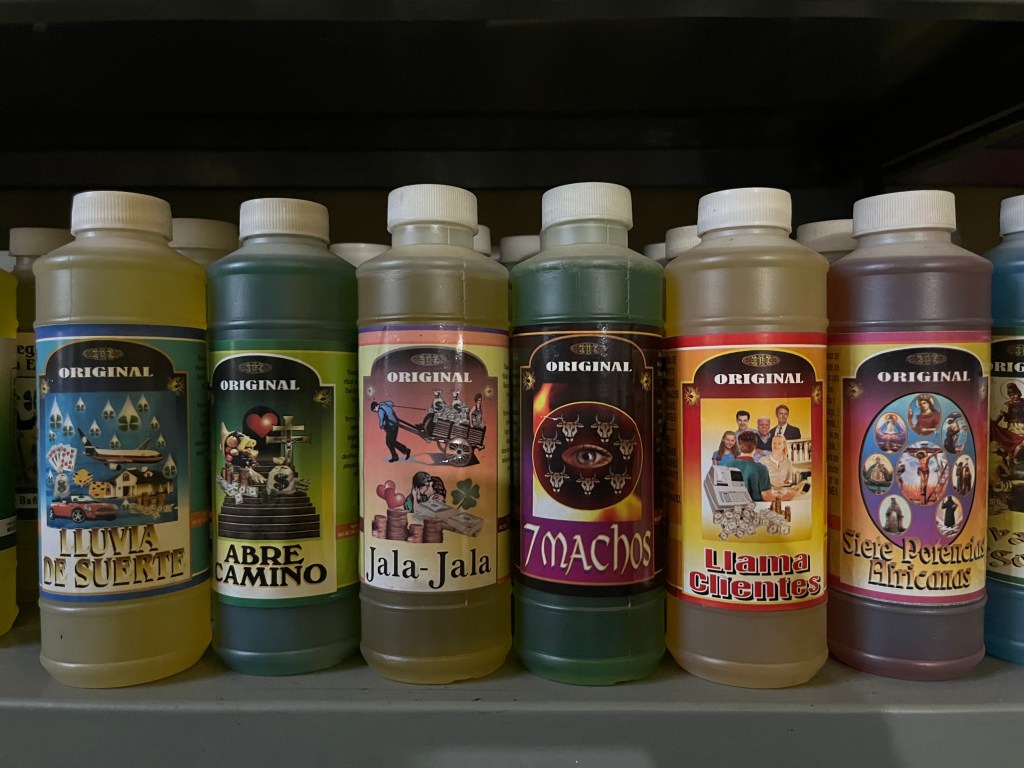
Hierberia San Benito Abad also has a wide range of aguas espirituales for different purposes. The ones featured in the slideshow are water based and include natural essences extracted from plants, aromas and herbs. The names of them are: Lluvia de Suerte, Abre Camino, Jala-Jala, 7 Machos, Llama clientes, and Siete Poderes Africanos.
Luis told me that in Matamoros many people come to his store looking for products related to Santa Muerte. At first he was skeptical about carrying such products but then he realized that there was a significant demand. In the image in the slideshow we can see that a candle, a bottle and an effigy of a skull that seems to be a rendition of Santa Muerte. As the bottle, suggests, Santa Muerte is also used for topics related to love, money, health, prosperity not just in situations involving high risk or death.
 Curandero Project
Leave a comment